
August 25, 2026 · 6 min read
What Should You Consider Before Getting a Website Built?
Before getting a website built, look beyond the design and consider performance, mobile experience, SEO infrastructure, technical approach, and the overall project process.
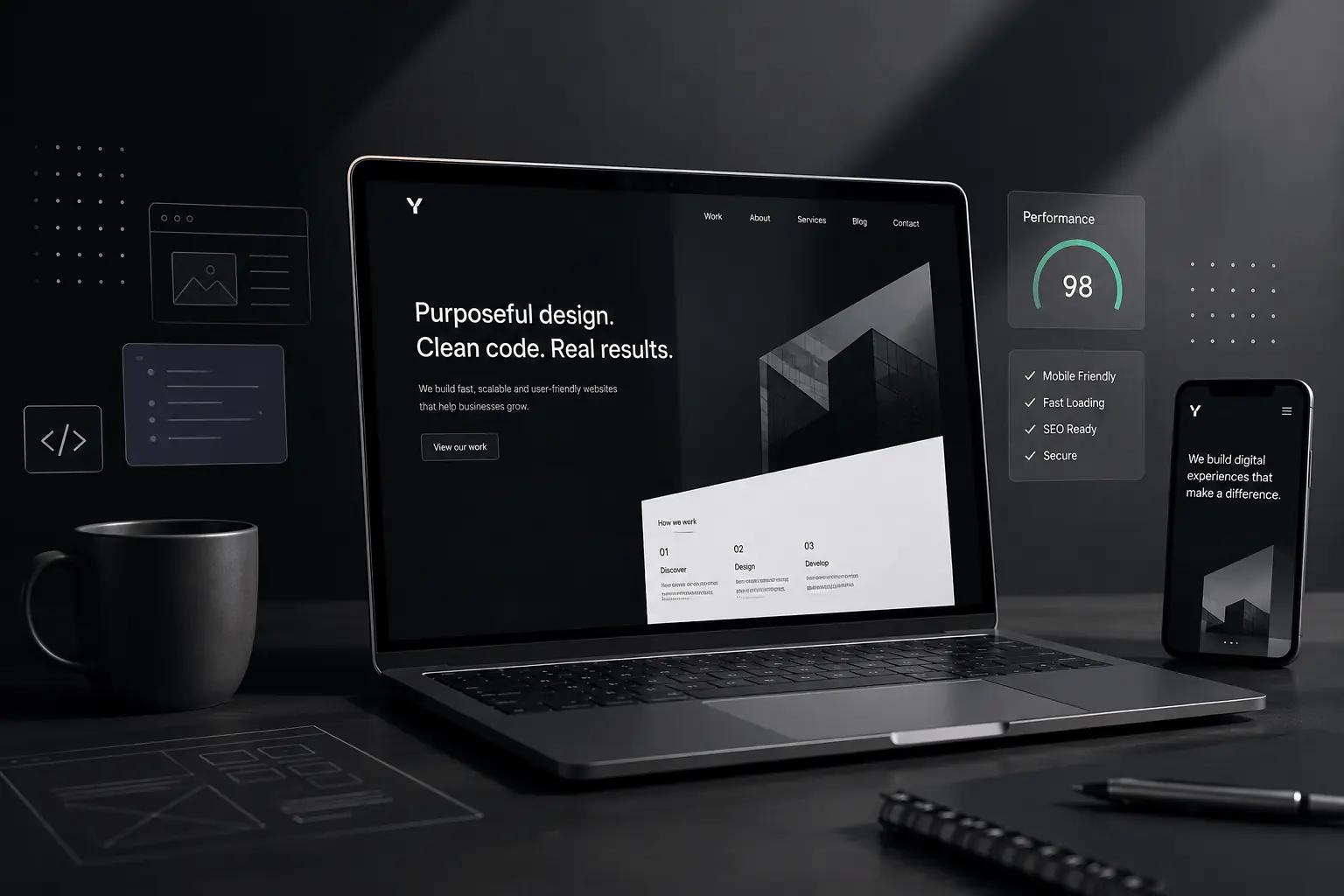
Getting a website built for your business is about more than creating a few good-looking pages. The purpose of the website, how users will navigate it, mobile experience, performance, and technical infrastructure are all factors that should be considered before the project even begins.
So, what should you pay attention to before getting a website built?
First, determine what you expect from your website
Start by asking yourself: What is this website supposed to achieve?
Do you want to attract new customers? Explain your services more effectively? Build trust in your business? Or simply establish a professional presence online?
The answer to this question will influence many decisions, from the design of the website to its content structure.
It is also useful to determine the priorities of the project from the beginning. Is design the main priority? Performance? Content? Or should all of these be balanced together?
Don't focus only on the design
A good-looking website is important, but it is not enough on its own.
When a user visits the site, can they easily find the information they are looking for? Is the navigation clear? Is it easy to move between pages? What is the experience like on mobile devices?
All of these are part of the user experience.
A good website therefore combines design and usability. A visually impressive website may still fail to achieve its purpose if users struggle to find basic information.
Find out how the website will be developed
When getting a website built, don't look only at the final design. It is also important to understand the technical approach behind it.
What technologies are being used? Is the site being built from a ready-made template, or is it being designed and developed specifically for the business?
There is no single approach that is right for every project. However, a website designed and developed around the needs of a business can be shaped more effectively around its brand and users.
At YayTech Studio, we don't use ready-made design templates. We design each project according to the business's needs and develop it on a custom Next.js-based infrastructure. The goal is to create a result that feels as original and relevant to the business as possible.
Ask how mobile experience and performance are tested
It is not enough to look at how a website performs on desktop.
A significant portion of website traffic comes from mobile devices. For this reason, mobile layouts, navigation, buttons, typography, and the overall user experience should be considered from the beginning of the project.
The speed at which a website loads is also an important part of the user experience. When getting a website built, it is worth asking the developer how mobile experience and performance are tested.
At YayTech Studio, we check Lighthouse scores and also test websites on real devices. The goal is not simply to achieve a certain score, but to understand how quickly the website becomes usable for an actual visitor.
Don't think of SEO as something to add later
SEO is not simply a collection of tasks that can be handled after a website goes live.
The technical foundation of the website should be prepared with SEO in mind from the development stage.
For example, page structure, sitemaps, structured data (JSON-LD), and other technical elements that help search engines understand the website can all be part of the development process.
At YayTech Studio, we deliver websites with a technical infrastructure that is ready for SEO work, rather than presenting the website itself as having completed SEO. Having the technical foundation ready does not replace ongoing content and SEO efforts, but it gives those efforts a stronger starting point.
Your competitors should be considered
Your website will not exist in isolation. It will be viewed alongside other businesses in your industry.
That is why reviewing competitors' websites before starting the project can be valuable.
What information do they highlight? What are they doing well? Where could their user experience be improved? In what areas can your business differentiate itself?
The purpose of this analysis is not to copy competitors, but to understand the landscape and create a result that is better suited to the business.
Discuss content and the revision process from the beginning
Getting a website ready for launch does not depend solely on the developer's speed.
If content, images, design revisions, or approvals are delayed, the launch of the website can also be delayed.
For this reason, it is useful to agree in advance on who will prepare the content, how revisions will be handled, and how the approval process will work.
It is also important to ask whether revisions are included and how many revisions are allowed. Revisions are a natural part of the process and help ensure that the final website feels right to the business owner as well.
Ask what happens after the website goes live
The project does not necessarily end when the website goes live.
It is worth finding out in advance how content updates, technical maintenance, security, new pages, and future development requests will be handled.
You should also clarify which services are included in the original project and which requests may require an additional fee, as well as how annual maintenance and support work.
Having these details clear from the beginning can prevent uncertainty after the website goes live.
What should you ask before getting a quote?
Before getting a website built, asking the developer or agency the following questions can help you better understand the scope and quality of the service:
- Which technologies will be used to develop the website, and why were they chosen?
- How will the mobile experience and website performance be tested?
- What does the technical SEO infrastructure include?
- How is the website protected against security threats and bot/spam traffic?
- Are revisions included? If so, how does the revision and delivery process work?
- How does maintenance and support work after the website goes live?
- How are requests that fall outside the original project scope handled?
The purpose of these questions is not to tell you which technology or service you should choose. They simply help you understand the scope of the service, the technical approach, and what happens after the project is delivered.
Conclusion
When getting a website built, it is worth looking at the entire project rather than focusing only on the design or the quoted price.
The purpose of the website, user experience, mobile compatibility, performance, SEO infrastructure, technical approach, content process, revisions, and post-launch support should all be discussed before the project begins.
Because a good website is not simply one that looks good. It should serve the needs of the business, help users find the information they need easily, and run on a technically solid foundation.
Keep reading

Let's talk about your project.
Get in touch ↗